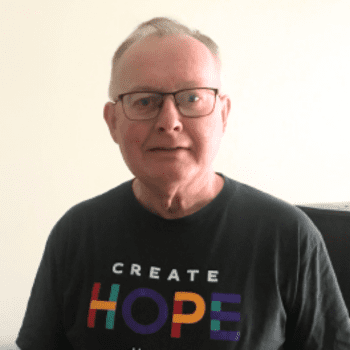

The call to Create Hope, our five-year theme, continues to inspire the mission of Development and Peace ― Caritas Canada. As we look back on the past year, we are struck by how deeply our work depends on the strength of community. Communities of bishops, clergy, staff, members, donors and partners here in Canada and around the world are the source of both resilience and renewal. We are grateful to each of you for sustaining this mission in a time of challenge and change.
Led by the United States, Western governments are retreating significantly from international solidarity. Canada’s last budget, for instance, reduced international aid spending by $2.7 billion over four years. Globally, such cuts would have removed about $84 billion in aid by the end of 2025. Across the Caritas confederation, 2,500 jobs have been lost, and budgets have had to be reduced by 25 per cent. For the poorest and most vulnerable people, this could mean the difference between life and death.
Meanwhile, many of the countries where we work have crippling debt burdens. Today, 3.4 billion people live in nations that spend more on servicing debt than on health or education. The 2025 Jubilee call to cancel unjust debts therefore offered us a path of spiritual renewal.
The determined efforts of our members and supporters to confront the debt crisis through Caritas Internationalis’s global Turn Debt into Hope campaign remind us that even with fewer tax dollars supporting international cooperation, our collective voice and action can make a profound difference.In the pages that follow, you will find stories from Bangladesh, Bolivia, Haiti, Sierra Leone and beyond. These are stories of communities creating hope under difficult circumstances. They reveal what becomes possible when people stand together in solidarity—whether confronting poverty, responding to crises, or working for justice and peace.
A landmark of our year was a visit to Bethlehem, where we stood with our partner Caritas Jerusalem. Cardinal Pizzaballa, the Latin Patriarch of Jerusalem, shared words that continue to resonate:
“It is not simple to talk about hope here. We must not confuse hope with solutions—political, social, or economic.The solution is not near. But hope is not a solution. Christian hope is something else. It is the desire to change reality. The desire in Caritas is still there. We don’t give up. We will never give up. Our love is not just a word; it is an action.”
— Cardinal Pierbattista Pizzaballa, Latin Patriarch of Jerusalem
These words, though spoken about Palestine, echo wherever human suffering persists.
Thank you for walking with us on this journey, and for sharing in our desire to change reality to one that creates hope.

President of the National Council
Interim Executive Director
President: Gabrielle Dupuis (Ontario)
Vice-president: Tashia Toupin (West)
Treasurer: Danny Gillis (Atlantic)
Secretary: Frank Fohr (Ontario)
Member: Most Rev. Jon Hansen (Bishop, West)
Outgoing president: Brenda Arakaza (Francophone youth representative)
Don Devine (Atlantic)
Simone Fournier (Quebec)
Most Rev. Martin Laliberté (Bishop, Quebec)
Reanne Laurie (Anglophone youth representative)
Teresa McKerral (West)
Marjolaine Mondon (Quebec)
Luc Picard (Member at large)
Most Rev. Pierre-Olivier Tremblay (Bishop, Ontario)
Most Rev. Bart Van Roijen (Bishop, Atlantic)
From September 1, 2024, to August 31, 2025

invested in overseas projects

reached directly and indirectly through overseas projects

in Africa, Asia, Eastern Europe, Latin America and the Middle East

in 34 countries


Bolivia’s new government, elected in August 2025, faces a multidimensional crisis, with profound economic, social and political repercussions. Poverty is hitting female heads of households and young people especially hard.
Between 2022 and 2025, our partner, the Centro de apoyo a la educación popular (CAEP, Center for the Support of Popular Education), implemented a project to support women and their families and to ensure active citizen participation based on social rights.
The project achieved concrete results by focussing on three priority areas:

Over decades of rapid growth, metropolitan Manila has become a megalopolis of over 14 million inhabitants. The city faces a serious housing crisis and is home to some of the world’s largest slums, where many families have been living in unsanitary conditions for generations. In addition to job precarity, they face forced evictions and risks associated with climate change.
To address their needs, we implemented a project entitled “Organizing impoverished urban populations to secure their rights to housing and residence in the context of climate change” with our long-standing local partner, Urban Poor Associates (UPA). In ten regions clustered mostly around Metro Manila, the project has supported several community-based organizations in strengthening the security of tenure of 4,804 households (19,696 people), with over 180,000 people benefiting indirectly.
To support marginalized urban communities in the struggle for secure, affordable and sustainable housing, UPA empowers and organizes them to develop “citizens’ plans” that promote dignity and resilience. UPA also promotes the peaceful defence of rights through legal recourse, dialogue with authorities, and media campaigns. This helps communities develop the capacity to analyze the causes of inequality and find their own sustainable solutions.
The impact of UPA’s work extends beyond the communities it serves. Bills and citizen plans developed with its support inspire national policies for community-led development. Its other initiatives like tree planting, collective savings and community risk management, too, demonstrate how sustainable change can come from within impoverished communities with proper organization and support.
With its expertise and local roots, UPA has become a national reference in housing, advocacy and social justice in the Philippines.


Haiti is one of the countries hardest hit by the impacts of climate change, even though Haitians have among the smallest carbon footprints in the world. Since the 2021 earthquake, the economy has struggled to recover. The bare mountains and fragile coastlines still bear the scars of 2016’s Hurricane Matthew. In mountainous areas, agriculture is practiced on unsuitable land. Farming on the 70 per cent of the soil that is unfavourable for cultivation exacerbates soil erosion.
On Haiti’s southern coast, the terrestrial and marine ecosystems of the communes of Les Anglais and Tiburon are seriously threatened. Deforestation, bush fires and unsustainable agricultural practices are impoverishing the soil, while coastal erosion, overfishing and the loss of marine habitats are threatening local livelihoods.
Responding to this situation, the PRADECO project was launched in October 2024 in partnership with the Institute of Technology and Animation (ITECA). The three-year project (2024-2027) aims to reduce the climate vulnerability of people living in these ecosystems through a participatory, inclusive approach that integrates gender equality and youth. It will indirectly reach over 53,000 people, 47 per cent of whom will be women.
The project focusses on:
The project is funded by the International Climate Cooperation Program of the Government of Quebec under its 2030 Plan for a Green Economy.

Between 2022 and 2025, our partner Justiça nos Trilhos (JnT, Justice on the Rails) supported communities in the northeastern state of Maranhão in defending their territories and fighting for ecological justice in the face of the destructive impacts of mining and industrial agriculture.
The project:
Over the past year, in the Maranhão municipalities of Açailândia, Buriticupu, and Alto Alegre do Pindaré:


During the civil war that ravaged Ethiopia’s northern Tigray region from 2020 to 2022, extreme violence, war crimes and serious human rights abuses were reportedly widespread. Women and girls, who were disproportionately targeted, are still suffering their profound repercussions. To support their recovery and that of their communities, we launched a project in collaboration with our local partner, the Adigrat Diocesan Catholic Secretariat.
The 14-month project, which ended in June 2025, provided integrated services to 150 women who had lost everything in the war―family members, possessions and homes. They received entrepreneurship training and financial support for small-scale income-generating activities like setting up a café or hair salon, or raising chickens, goats, sheep, etc.
The women also received psychosocial support and joined a self-help group that meets regularly, which has strengthened their social lives. They consult with one another; share their challenges and aspirations; save money together; and lend money to group members to develop their businesses. This mutual support has enabled them to provide for their families and stimulate the economic development of their communities.

In Sierra Leone, land is the principal economic resource for most impoverished women. However, customary practices limit women’s land rights even though they are recognized by existing laws. To protect women’s rights and combat customary prejudices, our partner Green Scenery led a project to raise awareness of existing legal protections.
The one-year project (ended April 2025) helped rural women become leaders and learn about and assert their rights. Through advocacy and practical initiatives, they compelled the authorities to guarantee their access to, ownership of and control over land.
In nine villages across three chiefdoms, 45 women―widows, heads of households, disabled women, landowners and land users―were designated “land rights champions.” They formed committees that familiarized 297 women with laws protecting women. Through public sessions, the committees also reached 500 to 1,000 people each week.
Thanks to the knowledge women acquired through the project, several land disputes have been resolved. One such case concerned Tiangay Sesay, a 33-year-old widow and mother of five children, including a set of triplets.


More than a million Rohingya people, over half of whom are children, have fled persecution in Myanmar (Burma) and found refuge in the Kutupalong-Balukhali refugee camps in the Cox’s Bazar district of neighbouring Bangladesh. Poverty, insecurity, and lack of access to education and training increase their risk for forced labor, early marriage, neglect and psychological distress.
That is why we set up a project with our partner Caritas Bangladesh that focuses on holistic development and the creation and strengthening of a protective environment for children, adolescents and their families.
The project’s five multipurpose child and adolescent centres offer informal preschool education, pre-vocational training, psychosocial support and peace education. Positive parenting sessions are offered to parents to help reduce domestic and community violence.
Between May 2022 and December 2024, the centres had a significant positive impact on the lives of 7,799 people.


On September 18 and 19, 2024, Israel remotely detonated explosives it had planted in pagers and walkie-talkies across Lebanon. This intensified the conflict that had been simmering for nearly a year in Lebanon, on the sidelines of Israel’s war on Gaza. Israel then followed up with a bombing campaign that began on September 23.
By mid-November 2024, UN agencies were estimating Israel’s escalated attacks on Lebanon to have killed over 2,400 people, injured over 11,500 people and dramatically increased the numbers of people displaced internally past 880,000.
Our partner, Caritas Lebanon, immediately mobilized to help those affected and displaced by the bombings. Their Solidarity Emergency Lebanon project quickly responded to the acute health care and protection needs of displaced persons, host communities, and, after a ceasefire in the south, returnees.
The project’s three core components that served as fundamental pillars of support were hospitalization subsidies, multipurpose financial aid and safe shelters for women and children affected by gender-based violence.
Thanks to the generosity of Canadians, we raised $256,647, which was matched by the Government of Canada. This enabled our partner to directly reach 2,847 people by:

The war in Ukraine, which has been ongoing since 2022, has been devastating for the people. It is estimated that around a third of the population needs humanitarian aid. To meet people’s basic needs and help them recover with dignity, we partnered with Caritas Ukraine to implement a nine-month project (September 2024 to May 2025) in the regions most affected by the war. These included the areas around Kharkiv, Sumy, Zaporizhzhia, Donetsk and Kherson.
The communities served by the project participated in its decision-making and implementation. The project reached 42,638 people, including 3,536 persons with disabilities, 2,834 children and 20,187 elderly people.
The project provided communities access to:
Almost all participants reported an improvement in their well-being or financial situation thanks to the support they received and emphasized that their particular needs had been considered.

in over 59 dioceses across Canada

in 244 regional events including 5,238 participants in nearly 110 courses and workshops across Canada

in the D&P Schools Program
In the fall of 2024, we had the opportunity to welcome Nnimmo Bassey, the executive director of the Health of Mother Earth Foundation, as part of the Reaping Our Rights campaign. He travelled to Thunder Bay, Winnipeg and Ottawa to talk about the realities of oil pollution in Nigeria and the importance of legislation and dialogue as precursors to social change.
In September 2025, we concluded the campaign with an event on Parliament Hill where we presented the campaign petition bearing the signatures of over 52,000 people calling for the adoption of mandatory human rights and environmental due diligence legislation.
In this Jubilee year, we played a key role in organizing the global Turn Debt into Hope campaign. From creating the campaign logo and materials that are being used around the world to implementing the campaign in Canada, our team collaborated with dozens of organizations around the world, especially Caritas Internationalis.
We helped mobilize thousands of people on every continent, inviting them to sign a petition calling for debt cancellation, the reform of the global financial system, and the establishment of a UN mechanism to resolve debt crises. By December 2025, we had already collected 52,000 signatures, toward a goal of 60,000.
During Lent, Luke Stocking, then the acting executive director, visited members in Western Canada. During his tour of Alberta and the Northwest Territories, he participated in several events and met with many people.
In June, we welcomed Cardinal Pedro Barreto, a longtime friend of Development and Peace ― Caritas Canada from Peru. He shared his environmental advocacy experience at a public lecture at the Our Lady of Lourdes parish in Toronto before going to Calgary to challenge, cheer and inspire the Jubilee People’s Forum.

As the world becomes increasingly uncertain and unstable, we continue our advocacy work in Canada to give voice to our partners.
Through open letters, statements, rallies and meetings with government representatives, we have ensured that the concerns of our partners in Palestine, Haiti and Sudan are heard. In particular, we have emphasized the need for Canada to make a stronger commitment to peace, international law and cooperation.
During the April 2025 federal election, we surveyed our partners to find out what priorities they would focus on if they could vote in Canada. The response was unanimous: they want Canada to assert itself as a true defender of democracy, step up the fight against climate change, and take full responsibility for the actions of its corporations abroad. We incorporated these insights into a Solidarity election guide to help our members and supporters vote with conscience and discernment.
In June, world leaders gathered in Kananaskis, Alta., for the G7 summit. While the Canadian government set the official agenda, civil society mobilized to propose a different vision centred on people and the planet. In collaboration with KAIROS Canada, the Office of Religious Congregations for Integral Ecology, the Canadian Council of Churches, and Citizens for Public Justice, we organized the Jubilee People’s Forum. People from diverse communities, from Kenya and Palestine to Washington and Whitehorse, gathered to discuss and strategize on issues of global importance. Watching meetings like the G7 can be discouraging, as little progress is made on the big issues. Yet by raising our voices in solidarity, prayer and peace, we were able to create hope and become protagonists for a better world.
For the first time since the pandemic stopped the practice five years ago, we organized an intergenerational solidarity tour. Nine members from Alberta, Manitoba and Ontario, and two Development and Peace ― Caritas Canada staffers visited Peru from July 13 to 25, 2025. There, they met teams from the Bartolomé de las Casas Institute; the Amazonian Center for Anthropology and Practical Application; the Centro Labor; and the Episcopal Commission for Social Action.
Immersing themselves in Peru’s history and current realities, participants gained a deep understanding of our partners’ work. From Lima to Iquitos, in the heart of the Amazon, they discovered their achievements and commitment to social justice and environmental protection.
This enriching experience inspired participants to become more involved in our movement. They were particularly touched by the testimony of José Manuyama, of the “Vicarate of Water” in Iquitos, who said, “We are the bridge to a new future, in harmony with the environment and with each other.”
The D&P Schools program continues to grow from coast to coast to coast! With 433 schools now registered, students are beginning to play a more significant role in the broader Development and Peace ― Caritas Canada movement. This year, D&P Schools students have:
A new “Food for All” badge that was added to the program in time for bringing the Reaping our Rights campaign to life, has been a huge success!
This year, our youth movement had 22 youth representatives across Canada. Through the year, they organized various events, including a Day of Discovery and Friendship and several webinars and awareness booths.
The National Youth Assembly held in January 2025 brought together 25 participants: eight francophone youth representatives, 10 anglophone youth representatives, four youth ambassadors, and, for the first time, two high school students from Mother Teresa School in London, Ont. It was a powerful moment that strengthened our movement’s ties with young people and celebrated their engagement in social justice.
We welcomed four new youth ambassadors who, accompanied by animators, participated in numerous activities (left to right).
Abel Marius Oulaï, Que., was interviewed on the Horizon Jeunesse radio show and took part in the Caritas Youth Forum in Rome.

donations received

in monthly donations from 4,309 monthly donors

bequests worth $2,620,982

from 27 stock donations

accumulated in the Solidarity Fund

Over the years, we have been continually inspired by the creative ways our community has supported our mission through fundraising.
For nearly 40 years, volunteer philatelists from the Montreal and Quebec City regions have passionately organized increasingly successful stamp sales. At each event, thousands of stamps from around the world are offered to stamp collectors in exchange for cash donations. From very modest beginnings, these sales have raised over $900,000 to date to fund our projects around the world.
We would like to express our deep gratitude to these volunteer philatelists, whose ongoing commitment is a testament to their exemplary solidarity.

On most Shrove Tuesdays for nearly a decade, the Knights of Columbus in Castlegar, B.C., have hosted a fundraising dinner in collaboration with our organization. The event has become a cherished Lenten tradition. Grand Knight Peter Laurie said, “It’s an important evening in our parish. We are able to start each Lent with a community meal, while also supporting the work of Development and Peace ― Caritas Canada and their Share Lent campaign.”
The Knights have supported several of our past campaigns, including by converting their parish into a bottled-water-free zone in 2010. Their Shrove Tuesday dinners bring in over $1,000 on average to support our work.
“Our Knights have always been keen to support St. Rita’s other ministries,” Laurie said. “Development and Peace ― Caritas Canada is one of the main ways we can ensure that our parish is able to connect with and support those in need around the world.”
Over 1,000 monthly donors like Patrick (Pat) Kennedy in St. John’s, N.L., are part of our Share Year-Round network, a community that acts for social justice and human dignity all year long.
Growing up in St. John’s during the 1950s and 1960s, Kennedy was already aware of the urgent needs of people in the Global South. Years later, when he moved to Ottawa with his young family, he responded to a notice in the parish bulletin seeking a volunteer to coordinate Development and Peace ― Caritas Canada’s activities. The first campaign he managed was for ending apartheid in South Africa and for freeing Nelson Mandela. With the success of that campaign, he was hooked!
Since returning home to Newfoundland in the 1990s, Kennedy has remained involved. For him, being a Share Year-Round member means putting his faith into action.
Through Development and Peace ― Caritas Canada, I have met some of the most amazing people from the Global South, who work tirelessly as the on-the-ground partners of the organization. They inspire me to keep going.
― Patrick Kennedy, N.L.

This year, our team took part in several international events, reflecting our movement’s commitment on the world stage.
In March, outgoing president and current francophone national council youth representative Brenda Arakaza and southwestern Ontario animator Daniela Salcedo participated in the 69th session of the United Nations Commission on the Status of Women (CSW69). They reviewed the 1995 Beijing Platform for Action, focusing on health, education, violence, economic rights and decision-making.
Our global Jubilee campaign was also promoted in Europe. Research and advocacy officer Dean Dettloff participated in an ecumenical consultation on debt in London, England, while campaigns coordinator Mayalène Lavigne-Martel shared its results at CIDSE’s COMED forum in Scotland.
A youth delegation including Quebec youth ambassador Abel Marius Oulaï, youth representative Geneviève Déziel, youth programs officer Lea Mannari and social media officer Sarah Kabrit attended the Caritas Youth Forum in Rome. Sarah and Geneviève also participated in the Youth Jubilee afterwards. The delegates met inspiring young people from around the world, shared our work in Canada and exchanged knowledge and ideas.

and 9 press releases published on our website

views by 33,372 unique visitors

received 22 newsletters and humanitarian appeals

followed us on our various social networks

of the 8 new episodes of our podcast Voices of solidarity
We also made 73 appearances in the media, including newspapers, websites and radio stations.
From the bottom of our hearts, we at Development and Peace ― Caritas Canada thank all our members, donors, religious communities and supporters.
We gratefully acknowledge the financial support of the Government of Canada, through Global Affairs Canada; the Government of Quebec, through the ministère de l’Environnement, de la Lutte contre les changements climatiques, de la Faune et des Parcs and the ministère des Relations internationales et de la Francophonie; the Manitoba Council for International Cooperation, the Canadian Foodgrains Bank; the Roncalli International Foundation; and the Catholic Women’s League of Canada in fulfilling our mission.
Don’t miss anything about the work of our international partners or our awareness and mobilization campaigns.
Sign up now for our newsletter.