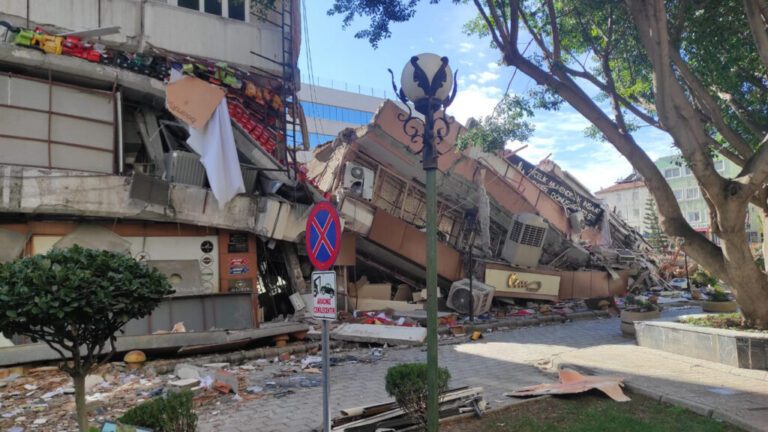
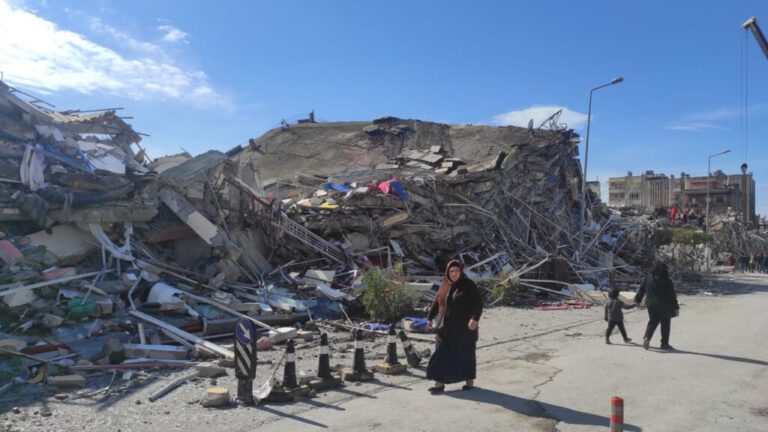
Türkiye (Turkey) is a transcontinental country that straddles Europe and Asia. It lies at the junction of several tectonic plates whose movements often cause tremors. On February 6, 2023, a magnitude 7.8 earthquake devastated several parts of southern Türkiye and northern Syria. It was followed by several aftershocks, including a magnitude 5.6 quake on February 27.
These unprecedented quakes left millions without food, water or shelter. They totally or partially destroyed some 300,000 houses, schools and hospitals across Türkiye and damaged critical infrastructure including water and power networks, roads, ports and airports.
This natural disaster occurred during a presidential and parliamentary electoral campaign. For the first time in two decades, a coalition of opposition parties was posing a serious threat to President Recep Tayyip Erdoğan. State machinery therefore seemed to be mobilized more to support his re-election than to help the earthquake victims.
About 3 million people fled the quake-hit areas to other parts of Türkiye, including Cappadocia and Istanbul. This huge wave of internal displacement strained the service provision capacities of host communities, especially with respect to housing. Driven by strong demand, rents rose exponentially.
Türkiye is also suffering from the wars at its borders. Over the last 20 years or so, rapid, unplanned urbanization and massive influxes of refugees―first from Iraq, then from Syria―fuelled a construction boom in which profiteering took precedence over safety. Developers often did not respect building codes and code compliance mechanisms were disregarded because of ignorance or corruption.
Often overlooked in this humanitarian crisis are rural communities that, too, suffered devastating effects of the 2023 earthquakes. The quakes affected some 16 million people and 20 per cent of the country’s food production across 11 agricultural provinces. These rural communities are also absorbing displaced people from neighbouring cities. The inability of small farmers to cover their costs following an inflationary spiral in 2024 led to the emergence of a rare social protest movement against Ankara in some rural areas.
Development and Peace ― Caritas Canada has been organizing democratic, sustainable development and humanitarian aid programs in Türkiye since 2000. We support people of all nationalities―Turkish, Kurd and Arab―who are marginalized by war, natural disasters, ill-conceived development and environmental injustices. Since 2023, our partner organizations are also particularly helping organize urban and rural communities that have suffered ecological and social harms because of the earthquakes and the government’s economic policies.





Development and Peace ― Caritas Canada has been serving people in need in Türkiye for over 20 years. In several instances, we have expressed our solidarity with Turkish and migrant peoples affected by quakes, conflicts, wars and exclusion.
In response to the recent earthquakes, we funded housing projects; the distribution of food and water; the installation of sanitation facilities; and the provision of medical and psychosocial rehabilitation services.
Fostered over several years, our partner networks in Türkiye have the requisite know-how for rebuilding towns, villages, houses and community infrastructure in a socially, economically and ecologically sustainable manner. The expertise of Turkish civil society, regional Caritas agencies and international Caritas organizations working in the country, too, have proven invaluable.
In the post-earthquake context of still-pressing needs, Development and Peace ― Caritas Canada works on continuum from rapidly assisting quake-affected people to facilitating socioeconomic recovery and promoting development, with a view to turning villages, towns and urban agglomerations into spaces where people can live in safety and dignity. Our partners are also helping organize urban and rural communities affected of the earthquakes and misguided economic policies.
Our work focusses on three areas:
In all programming, priority is accorded to the following vulnerable groups:
Don’t miss anything about the work of our international partners or our awareness and mobilization campaigns.
Sign up now for our newsletter.