
By Sarah Kabrit, Social Media Officer
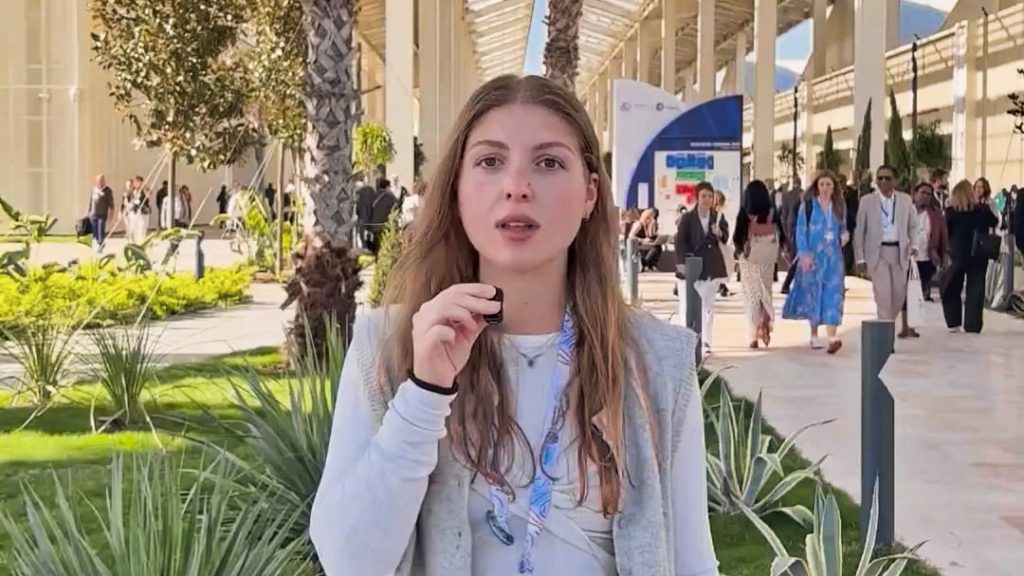
When I arrived in Antalya, Türkiye, for the COP31 UN Climate Change Conference as part of the youth delegation of the Association québécoise des organismes de coopération internationale (AQOCI; see website in French), I knew I was about to experience something significant. But nothing quite prepares you for witnessing international climate negotiations first-hand.
For the first time, I had the opportunity to sit inside negotiation rooms, observe discussions between countries and see how decisions that affect billions of people around the world are debated and, sometimes, delayed. It was an incredibly enriching experience. I met young people, civil society organizations, activists and representatives from different parts of the world, all bringing their own realities and demands to the same space.
Yet, as inspiring as the experience was, it was also deeply frustrating.
COP31: the “implementation COP” without implementation
COP31 had been presented as the “implementation COP.” After years of commitments and promises, this was supposed to be the moment when countries moved beyond discussions and started putting concrete solutions into action.
But sitting in on the negotiations, I was struck by how slowly things were moving. Discussions were still getting caught up in the wording of texts and revisiting language from previous COPs. Countries were disputing specific terms, delaying decisions and, at times, seemingly holding up progress on purpose.
I remember thinking, “How are we still having these conversations?”
“We are running out of time. The climate crisis is not waiting for countries to reach a consensus, and we cannot afford another year of inaction.”
One of the most disappointing outcomes was the failure to reach consensus on a final pact that included a clear commitment to transitioning away from fossil fuels. Despite the urgency, the final proposed text did not establish a clear path forward. Countries ultimately left Antalya without an agreed cover decision!
It raises an important question: are we genuinely prepared to move away from fossil fuels?
The contradictions were difficult to ignore. Billions of dollars and enormous resources were invested in organizing a conference of this scale, while the leaders and decision-makers attending it struggled to agree on meaningful action. Canada’s Prime Minister, Mark Carney, did not attend the leaders’ summit. Meanwhile, the presence of private jets transporting political leaders and other influential participants was another striking reminder of the contradictions surrounding these conferences.
Making sure young people have a seat at the table
Despite these frustrations, some of the most meaningful moments of my experience came from the opportunities we had to bring our voices directly to decision-makers.
As part of the AQOCI youth delegation, we met with Quebec’s environment minister, Jean Pellerin, alongside members of civil society. It was an opportunity to express our concerns, share our demands and clearly communicate where we stand on climate action.
These conversations matter, but they are not enough. Young people should not simply be invited to share their opinions or participate in symbolic consultations. We need to be part of the decisions themselves.
I was also fortunate to participate as a panelist in a dialogue with members of a Chadian youth delegation. Hearing the different perspectives of young people from an African country, discussing the challenges facing our respective communities and exchanging ideas about climate action reinforced something I strongly believe: young people must be decision-makers.
Why should decisions about our future be made without us?
Leaving with questions and determination
I left COP31 with mixed feelings. I was grateful to have witnessed such an important international process, to have met inspiring people and to have contributed, even in a small way, to the conversations taking place there. At the same time, I left disappointed by the lack of political ambition and the distance between what governments say and what they are actually prepared to do.
But I do not want my main takeaway from COP31 to be one of defeat.
If anything, this experience made me realize even more how important it is for civil society organizations like Development and Peace ― Caritas Canada and local communities to keep pushing. The absence of political consensus does not mean that progress is impossible.
The problem is not that we lack solutions. It is that the people and organizations implementing them are not receiving the political support and financial resources they need to scale up their work.
We cannot afford to move at the pace we are moving today. We need governments to step up, we need funding to reach the right places, and we need decision-makers to listen to the people who have been proposing solutions for years.